
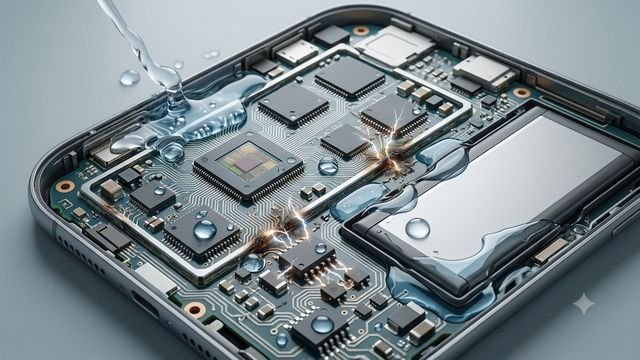
Electronic devices have become an essential part of modern life. Smartphones, laptops, televisions, smartwatches, gaming consoles, and household appliances help us communicate, work, learn, and entertain ourselves. Although these devices are incredibly advanced, they share a common weakness: water.
Most people know that dropping a phone into water or spilling a drink on a laptop can cause serious damage. Sometimes the device stops working immediately. In other cases, it may continue functioning for a while before developing problems later. But why does water damage electronic devices so easily?
The answer lies in the way electricity and electronic circuits work. Water can interfere with electrical pathways, create short circuits, cause corrosion, and damage sensitive components. Understanding the science behind water damage helps explain why electronics and moisture rarely mix well.
How Electronic Devices Work
To understand water damage, it is important to know how electronic devices function.
Inside every electronic device is a network of tiny components connected through circuit boards. These circuits guide electricity along carefully designed paths.
Engineers create these pathways to ensure that electrical signals travel only where they are supposed to go.
For example, when you press a button on a smartphone, electrical signals travel through specific circuits to activate the desired function.
Every component has a particular role:
- Processors perform calculations.
- Memory chips store information.
- Batteries provide power.
- Sensors collect data.
- Displays show images and text.
For the device to work properly, electricity must remain within these controlled pathways.
Is Water Conductive?
Many people assume that pure water is an excellent conductor of electricity.
In reality, completely pure water conducts electricity very poorly.
However, the water we encounter in daily life is rarely pure.
Tap water, rainwater, river water, and seawater contain dissolved minerals, salts, and impurities.
These substances allow water to conduct electricity much more effectively.
As a result, water can create unintended electrical connections inside a device.
This is one of the primary reasons electronics become damaged when exposed to moisture.
The Problem of Short Circuits
One of the most common forms of water damage is a short circuit.
A short circuit occurs when electricity takes an unintended path.
Normally, electrical current flows through designated circuits.
When water enters a device, it may connect two separate electrical pathways.
Electricity can then jump across these connections and travel where it was never intended to go.
This sudden change can overwhelm delicate electronic components.
Microchips, transistors, and integrated circuits are especially vulnerable.
In severe cases, a short circuit can permanently destroy components within seconds.
Damage to Microchips
Modern electronic devices contain billions of microscopic transistors packed into tiny computer chips.
These structures are incredibly small and sensitive.
Even tiny amounts of moisture can interfere with their operation.
When water bridges microscopic circuits, electrical signals become distorted.
The processor may begin receiving incorrect information or stop functioning entirely.
Because many components operate at extremely low voltages, even a small disturbance can cause significant problems.
This is why smartphones and computers can fail after exposure to relatively small amounts of water.
Corrosion: The Hidden Threat
Sometimes a device appears to survive water exposure.
However, hidden damage may still occur.
One of the greatest long-term dangers is corrosion.
Corrosion is a chemical reaction that gradually breaks down metal surfaces.
When water reaches metal contacts and circuit traces, it can begin a process similar to rusting.
Over time, corrosion eats away at the conductive materials that carry electrical signals.
The damage may continue long after the device has dried.
A phone that seems fine today may stop charging or lose functionality weeks later because corrosion has weakened critical connections.
For this reason, water damage is often more serious than it initially appears.
Why Salt Water Is Especially Dangerous
Not all water causes the same level of damage.
Salt water is particularly harmful.
Seawater contains large amounts of dissolved salt, making it highly conductive.
This increases the likelihood of short circuits.
Salt also accelerates corrosion dramatically.
Even if a device is recovered quickly, salt residue can remain inside.
These residues continue attracting moisture from the air and promoting corrosion.
As a result, devices exposed to seawater often suffer more severe and permanent damage than those exposed to fresh water.
Battery Problems
Modern electronic devices typically use lithium-ion batteries.
These batteries store significant amounts of energy.
Water reaching the battery compartment can create dangerous situations.
Possible consequences include:
- Reduced battery performance
- Internal short circuits
- Overheating
- Swelling
- Permanent battery failure
In rare cases, damaged batteries may catch fire or release hazardous chemicals.
This is one reason manufacturers recommend turning off wet devices immediately.
Preventing electrical activity helps reduce the risk of battery-related problems.
Why Turning On a Wet Device Is Risky
A common mistake occurs when people try to test whether a wet device still works.
Turning on a wet device can actually make the damage worse.
When electricity begins flowing through circuits that contain moisture, short circuits become more likely.
Components that might have survived water exposure can be permanently damaged once power is applied.
This is why experts often recommend:
- Turning the device off immediately.
- Disconnecting any power source.
- Removing the battery if possible.
- Allowing the device to dry completely.
Patience can sometimes prevent additional damage.
Water Resistance and Waterproof Designs
Manufacturers understand that accidents happen.
As a result, many modern devices include water-resistant features.
These may include:
- Rubber seals
- Protective gaskets
- Waterproof adhesives
- Special coatings on circuit boards
- Reinforced charging ports
Water-resistant devices are designed to prevent moisture from reaching sensitive components.
However, water resistance does not mean complete immunity.
Protection can decrease over time due to wear, drops, and physical damage.
Even devices marketed as water-resistant can still be harmed under certain conditions.
Can Water-Damaged Devices Be Repaired?
The answer depends on the severity of the damage.
Minor water exposure may only require cleaning and drying.
Professional repair technicians often use specialized equipment to remove moisture and corrosion.
In more serious cases, damaged components may need replacement.
Repair success depends on several factors:
- Type of water involved
- Duration of exposure
- Whether power remained on
- Extent of corrosion
- Speed of intervention
Early action significantly improves the chances of recovery.
The Future of Water-Resistant Electronics
Engineers continue developing technologies that make electronics more resistant to water damage.
Advances include:
- Improved waterproof seals
- Nano-coatings
- Better battery protection
- Waterproof connectors
- Enhanced device designs
Some specialized devices can even operate underwater.
As technology advances, future electronics may become increasingly resistant to accidental spills and exposure.
However, complete protection remains challenging because electronic systems rely on delicate circuits that must remain electrically isolated.
Conclusion
Electronic devices stop working when water gets inside because water disrupts the carefully designed electrical pathways that allow circuits to function properly. It can create short circuits, damage microchips, trigger battery problems, and cause long-term corrosion. While pure water is a weak conductor, the minerals and impurities found in everyday water make it capable of carrying electricity and damaging sensitive electronics.
Modern manufacturers have introduced water-resistant designs to reduce these risks, but no device is entirely immune to water damage. Understanding how water affects electronic components helps explain why quick action is important whenever an electronic device becomes wet. In the world of electronics, even a few drops of water can have significant consequences, demonstrating how delicate and sophisticated modern technology truly is.